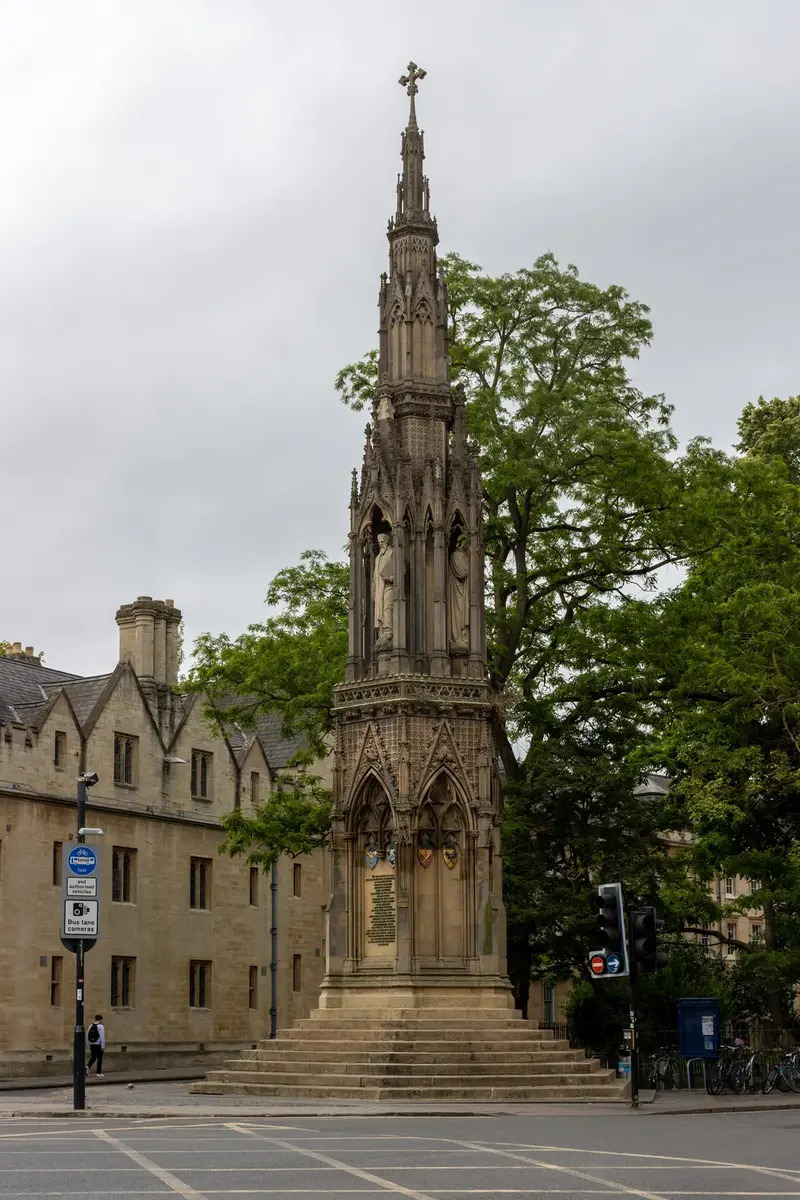
Martyrs' Memorial
RecommendedSir Gilbert Scott's 1843 Gothic-Revival monument to Cranmer, Latimer and Ridley — the three Oxford Martyrs burned for heresy in 1555–1556.
7 entries across places, people, and walks.
Sir Gilbert Scott's 1843 Gothic-Revival monument to Cranmer, Latimer and Ridley — the three Oxford Martyrs burned for heresy in 1555–1556.
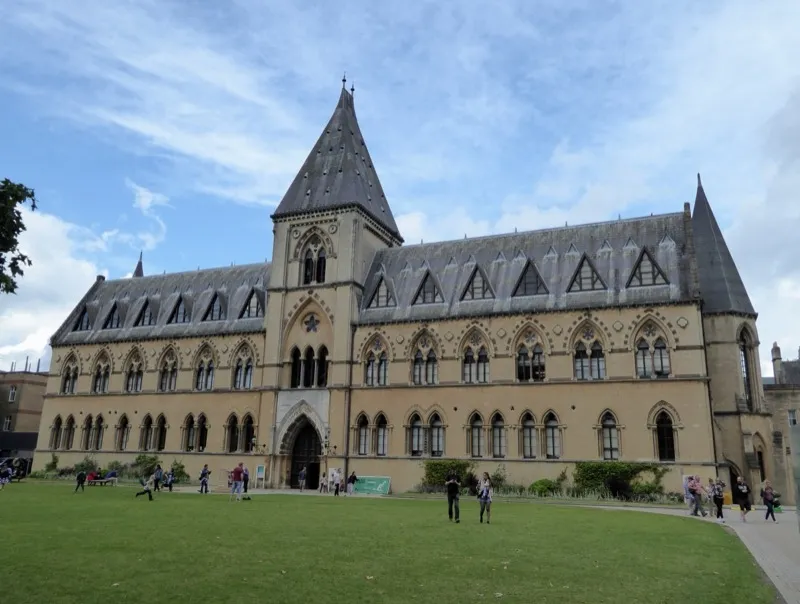
Dinosaurs, dodos, and Darwin's legacy — all under a Gothic Revival iron-and-glass roof.
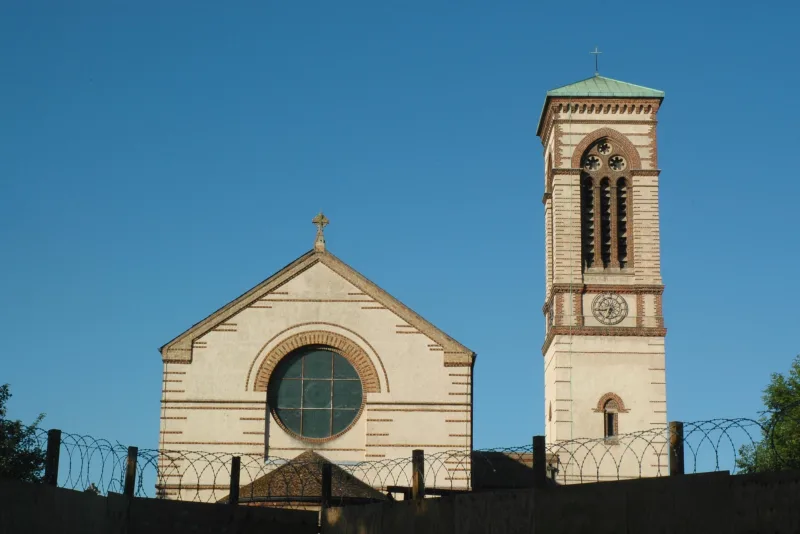
Jericho's Romanesque basilica — informally known as the 'Oxford Basilica' — built in 1869 by Sir Arthur Blomfield for Thomas Combe of OUP, modelled on San Clemente in Rome and the Ravenna basilicas, with an Italianate campanile visible across the canal.
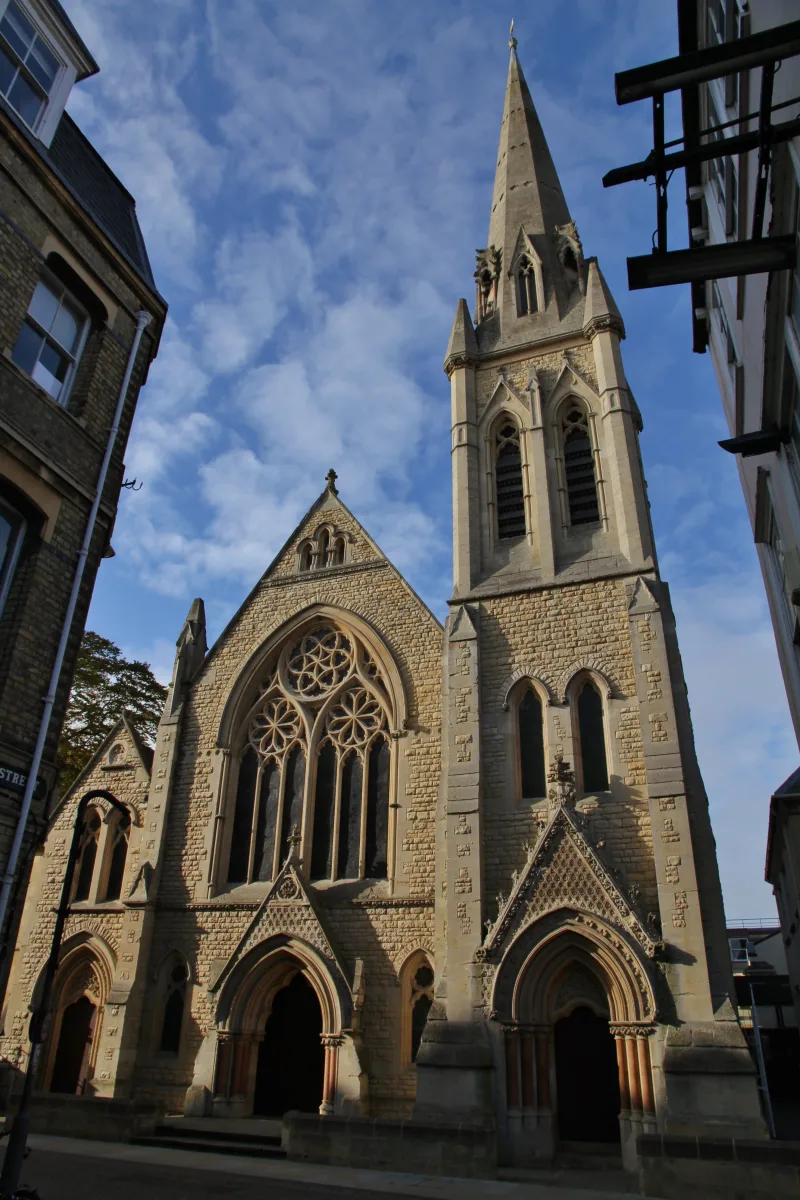
Central Oxford's Methodist church — the present Gothic Revival building was opened in 1878 by Charles Bell, on a street where John Wesley preached on 4 July 1783.
The North Oxford house where James Murray edited the first edition of the Oxford English Dictionary from a corrugated-iron shed in the back garden — the original Scriptorium, with 1,029 pigeon-holes and a Post Office postbox of its own.
An 1894 fire station on George Street, reopened as an arts centre in 2011 — theatre, comedy, exhibitions and a café-bar — sharing the building with homelessness charity Crisis.
The Pre-Raphaelite Brotherhood's most famous fiasco — Rossetti, Morris and Burne-Jones painted Arthurian scenes onto the bare brickwork of the Union's debating hall in 1857. The paint started peeling before the work was finished.