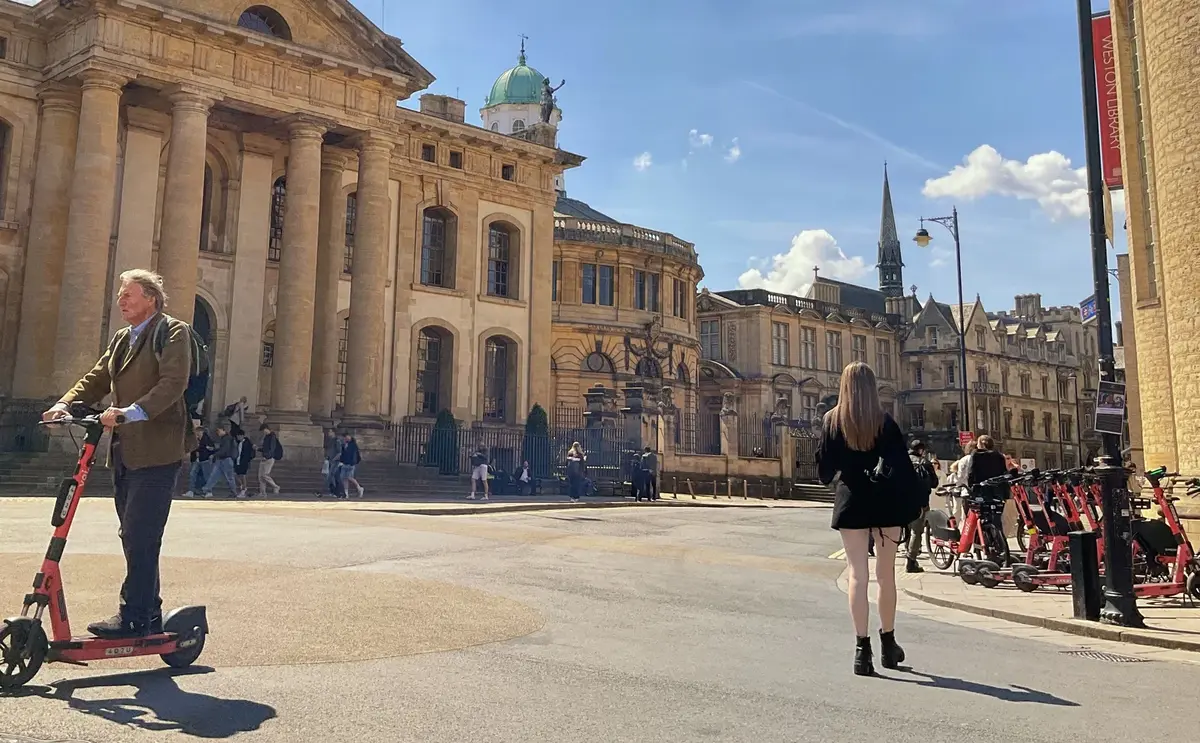
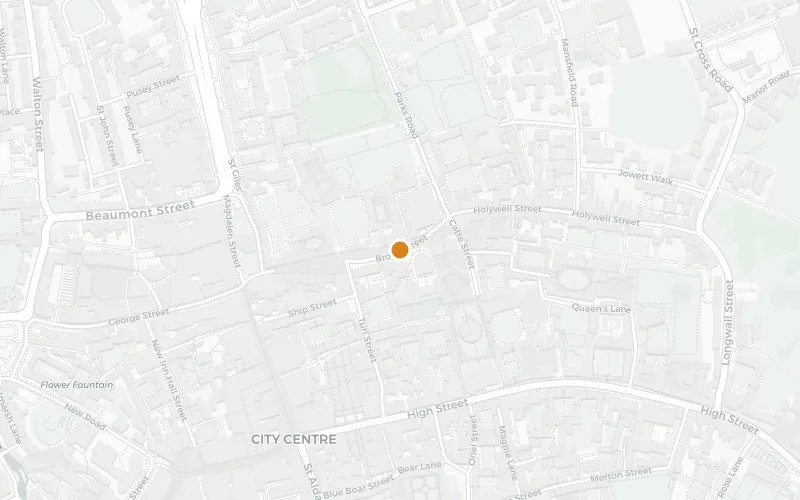
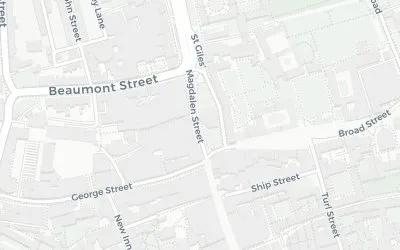
Broad Street — known to Oxford residents simply as "The Broad" — runs just north of the line of the former medieval city wall, on ground that was once the town ditch known as Canditch. It was originally Horsemonger Street, the city's horse market, and only widened into its present form when the wall was dismantled in the 16th and 17th centuries to reuse its stone; one bastion still survives behind number 6. The wider Broad that grew on top of those burgage plots became Oxford's most institutionally dense address.
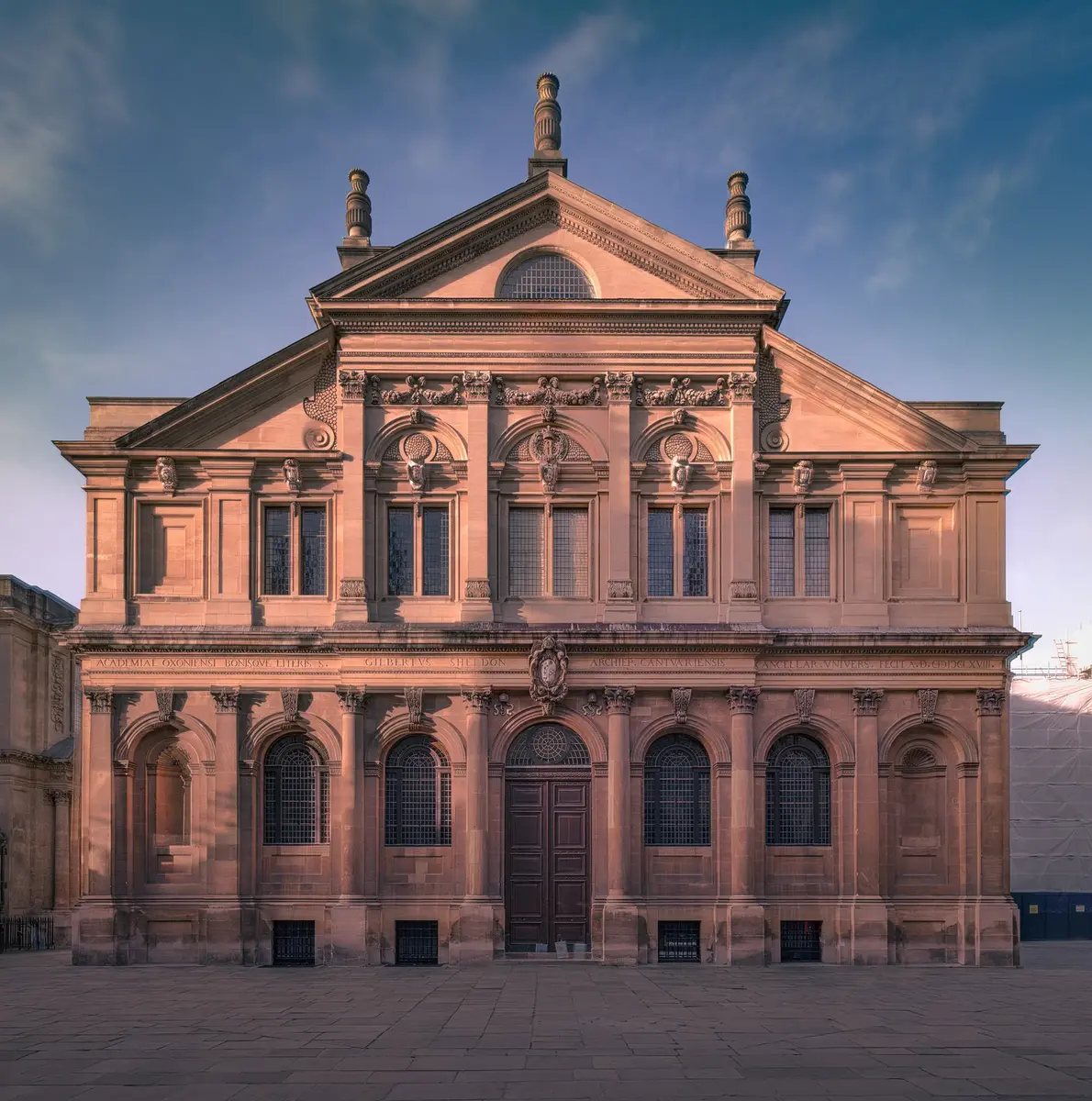
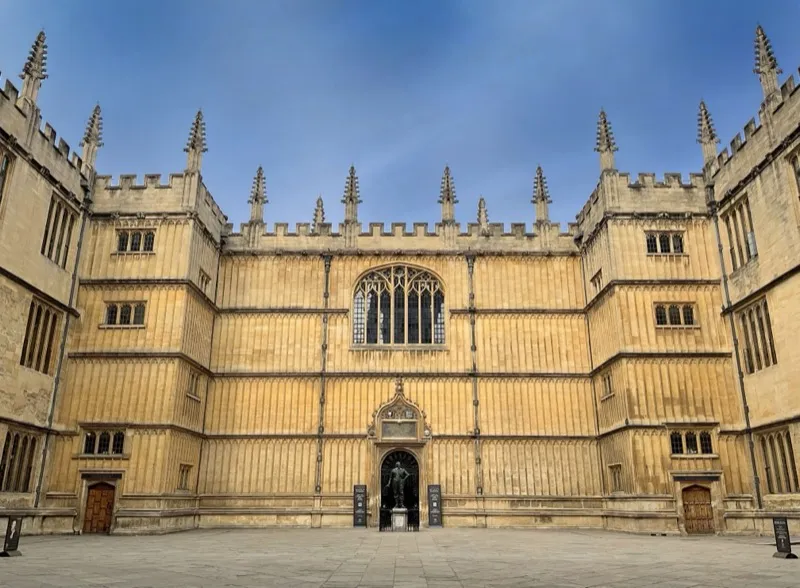
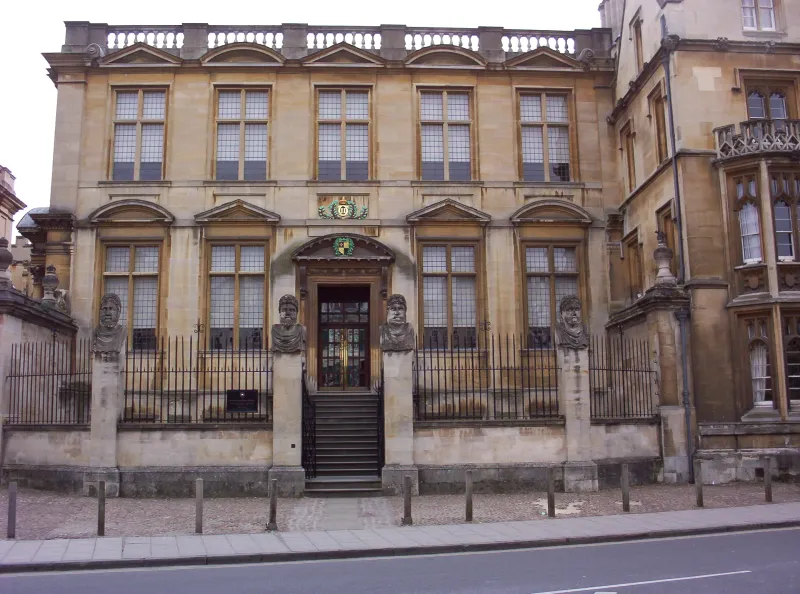
The south side carries a near-unbroken sequence of major university buildings. The Sheldonian Theatre, built in 1664–68 to a design by Sir Christopher Wren, sits behind its stone wall and emperor heads. Next to it, the Old Ashmolean Building of 1683 — originally the home of Elias Ashmole's collection and the world's first museum to open to the public — became offices for the Oxford English Dictionary in 1845 and has housed the Museum of the History of Science since 1924. Beyond it stand the Clarendon Building of 1711–15, designed by Nicholas Hawksmoor for the Oxford University Press's printing operations, and the Weston Library, the Bodleian's modern wing renamed in 2015. On the north side, Balliol and Trinity face the street directly; Exeter College sits behind, its front entrance round the corner on Turl Street.
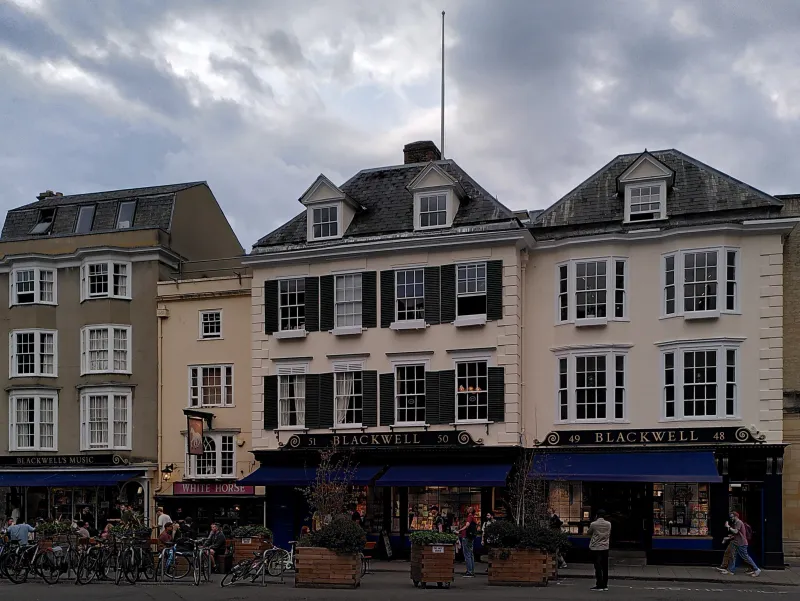
The street's other identity is bookish and commercial. Blackwell's at number 50 was founded in 1879 by Benjamin Henry Blackwell — the shop began as a 12-foot-square room and grew through the cellar and neighbouring shops into the cluster you see today. The street's one remaining pub, a 16th- or 17th-century timber-framed building next door, is fittingly called the White Horse. Up the road, the first Oxfam shop opened at 17 Broad Street in 1947 and is still trading. Set into the cobbles opposite Balliol, a small granite cross marks where the Protestant Oxford Martyrs — Hugh Latimer and Nicholas Ridley on 16 October 1555, and Archbishop Thomas Cranmer on 21 March 1556 — were burnt at the stake just outside the old city wall. The more elaborate Gothic Revival Martyrs' Memorial stands a short walk away on St Giles'.
Historical names: Horsemonger Street
Sources:
Wikipedia: Broad Street, Oxford · Wikidata: Broad Street (Q60032) · OpenStreetMap: Broad Street